Fail Big. Win Bigger: Lessons From a $70M + Patent Lawsuit Battle
PhD in Failure, Volume 21

From –$1M operating income to a Supreme Court patent battle: lessons no founder wants to learn the hard way. You’ve probably heard the saying, “necessity is the mother of invention.”
But when you’re staring at a negative $1M operating income, that phrase stops sounding motivational — and starts feeling like a survival instinct.
Imagine yourself there. The bills are piling up. Investors are jittery. The clock is ticking. Yet, something inside you refuses to quit. You pivot. You create something entirely new — a category that didn’t even exist before.
And then, miraculously, it starts working. The numbers turn. The bleeding slows. The long nights finally start to make sense. You think to yourself: Maybe… maybe we’re turning the corner.
Then one morning, a police officer walks into your office and hands you a 50-page legal summons.
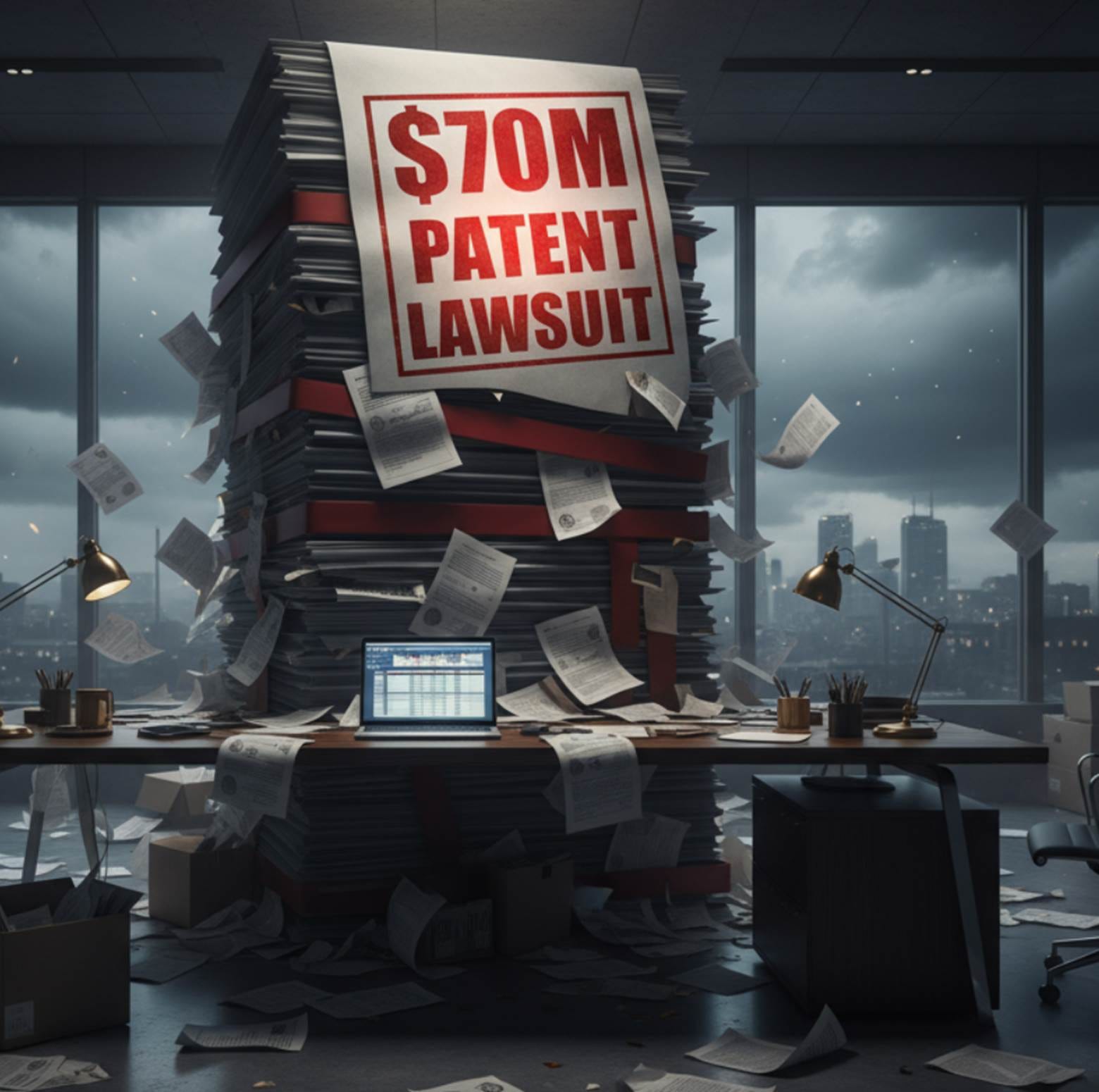
If you’ve never had that happen — I can tell you — it sends chills down your spine. Your hands shake. Your brain freezes.
We had just been hit with a patent infringement lawsuit from an industry incumbent — a company far bigger, richer, and more politically connected than we were. They were seeking $70 million plus in damages. As if that weren’t enough, they followed it with a press release blasting the news across the entire industry. That moment could have been the end. But it wasn’t.
It became one of the most transformative chapters of my life as a founder.
Here’s what I learned — and what I wish someone had told me before I ever set foot in a legal battle.
Lesson 1: Don’t react. Don’t cry. Don’t panic.
In capitalism, lawsuits are almost inevitable — the more successful you are, the more likely someone will try to challenge or intimidate you.
When you’re sued, your first move isn’t to call your lawyer. Instead, request a meeting with the opposing party without lawyers present. In most disputes, no one really wins except the attorneys. If there’s a human path to a win–win, take it.
The hardest part for founders is separating ego and emotions from the conflict. I know it’s not easy, but staying calm, strategic, and focused on outcomes is what allows you to survive — and even benefit — from situations most would panic over.
In our case, the other side wasn’t looking for peace — they were looking to crush us. The CEO told me outright his goal was “shock and awe.” He was betting that a small startup, already reeling from back-to-back black swan events, would fold — and that our collapse would serve as a warning to anyone daring to enter their space (small or big).
We didn’t. Why ( Read PhD in Failure Volume 7)
Lesson 2: Hire the best lawyers you can afford (and then negotiate).
As the defendant, the burden is on you to prove you did nothing wrong. We hired Vinson & Elkins, one of the top law firms in the Energy space., at $80K per month — a fee we could barely afford. Trust me, we were tempted to go with a cheaper boutique firm, but this is one gamble you shouldn’t take. In hindsight, choosing a top-tier, trusted firm over a smaller, cheaper option was the best decision we made.
But we built a relationship with the partner, showed them our vulnerabilities, and negotiated a no time limit payment plan at 0% interest.
Even in law, transparency builds trust.
Lesson 3: Negative press isn’t always bad press.
Our opponent tried to damage us by announcing the lawsuit publicly to all our clients and prospects in the energy sector. It backfired.
People who had never heard of us now suddenly did. A few prospects even came forward with inside information proving that the plaintiff’s patent should never have been granted.
Their attempt to shame us turned into unexpected leverage. Sometimes your greatest exposure becomes your greatest opportunity.
Lesson 4: Understand the system — and use it.
The U.S. judicial system is strong, but slow.
Judges, especially in federal courts, are buried in cases. Motions take months or sometime years to move. Lawyers rack up hours.
Here’s what I wish I’d known:
File to transfer your case to a less plaintiff-friendly court if possible.
Push for a motion to dismiss as early as possible — trials can easily exceed $1M in costs. Our lawyers racked up over $500K in fees just preparing for the trial, because the federal judge didn’t rule on the motion until one day before the trial. By that time, the plaintiff had already filed an appeal to the Supreme Court, and the fight dragged on.
Politely but persistently ask judges to rule on pending motions, especially if you’re a startup strapped for cash. Lawyers often oppose this move but in hindsight I would call the county clerk and explain your position and push for motion directly.
Lesson 5: Protect your innovation early.
If you’ve built something novel — file a provisional patent.
It costs less than $100 and takes minutes online. That date becomes your priority date, and in the patent world, that’s everything.
Too many founders wait until their product is “perfect.” Don’t.
The person who files first, not the person who invents first, often wins.
Lesson 6: Choose your expert witnesses yourself — never leave it to lawyers.
When you’re defending a technical or patent-related case, you’ll almost always need expert witnesses to prove your point. Here’s what I learned the hard way: don’t let your lawyers pick them.
You understand your business, your product, and your technology better than anyone.
Lawyers tend to select from their internal Rolodex — professionals who may be credible but charge sky-high rates.
We made that mistake and ended up paying over $600 per hour, fees that could have been halved had we sourced and negotiated directly.
My advice:
Consult industry veterans yourself. You’ll find sharper experts who truly understand your space.
Negotiate rates directly. Most experts respect founders who reach out with authenticity and purpose.
Picking the right experts can literally change the trajectory — and cost — of your defense.
Lesson 7 – Use Retention Money as a Signal
From our experience, the larger the retention fee a law firm requests, the more cautious you should be. The larger the retainer the higher the chance law firm is not that good in my opinion.
Also, note that most top firms market themselves as full-service, but in reality, each excels at one or two specialties. Don’t hire them for every legal battle you might face, especially as your revenues grow. For example, after our patent case, we never used Vinson & Elkins for business or commercial litigation — it simply wasn’t their strength.
The Outcome
After 1.6 years of sleepless nights, mountains of paperwork, and millions in legal exposure, we finally won — even taking the case to the Supreme Court.
But here’s the truth: the legal victory wasn’t the real win.
The real win was learning how to stay calm when the ground disappears beneath you.
Because lawsuits, crises, and chaos don’t define your company.
How you respond to them does.
About the Author
I’m Doctor Fail — a founder who turned failure into a multi-million dollar lesson. I share the raw stories no one talks about so you can skip the pain and grow faster. Today, I mentor startups and write PhD in Failure to help you navigate the grind from 0 to 1.
Dr. Fail
Still learning. Still falling forward.