The Sales Question Every Growing Startup Gets Wrong
PhD in Failure, Volume 25

Your company is finally growing.
New logos are coming in. Revenue is climbing. The team is expanding.
And suddenly you face a deceptively simple question:
Should your salespeople just sell… or manage accounts too?
Then the follow-up questions start piling up:
When do I hire Customer Success?
When should I split the roles?
What if my entire company is only 3–5 people?
Most founders treat this like an org chart decision. It isn’t.
It’s actually a human psychology problem disguised as a process problem.
And if you get it wrong, growth slows in ways you can’t easily diagnose.
I learned this the hard way.
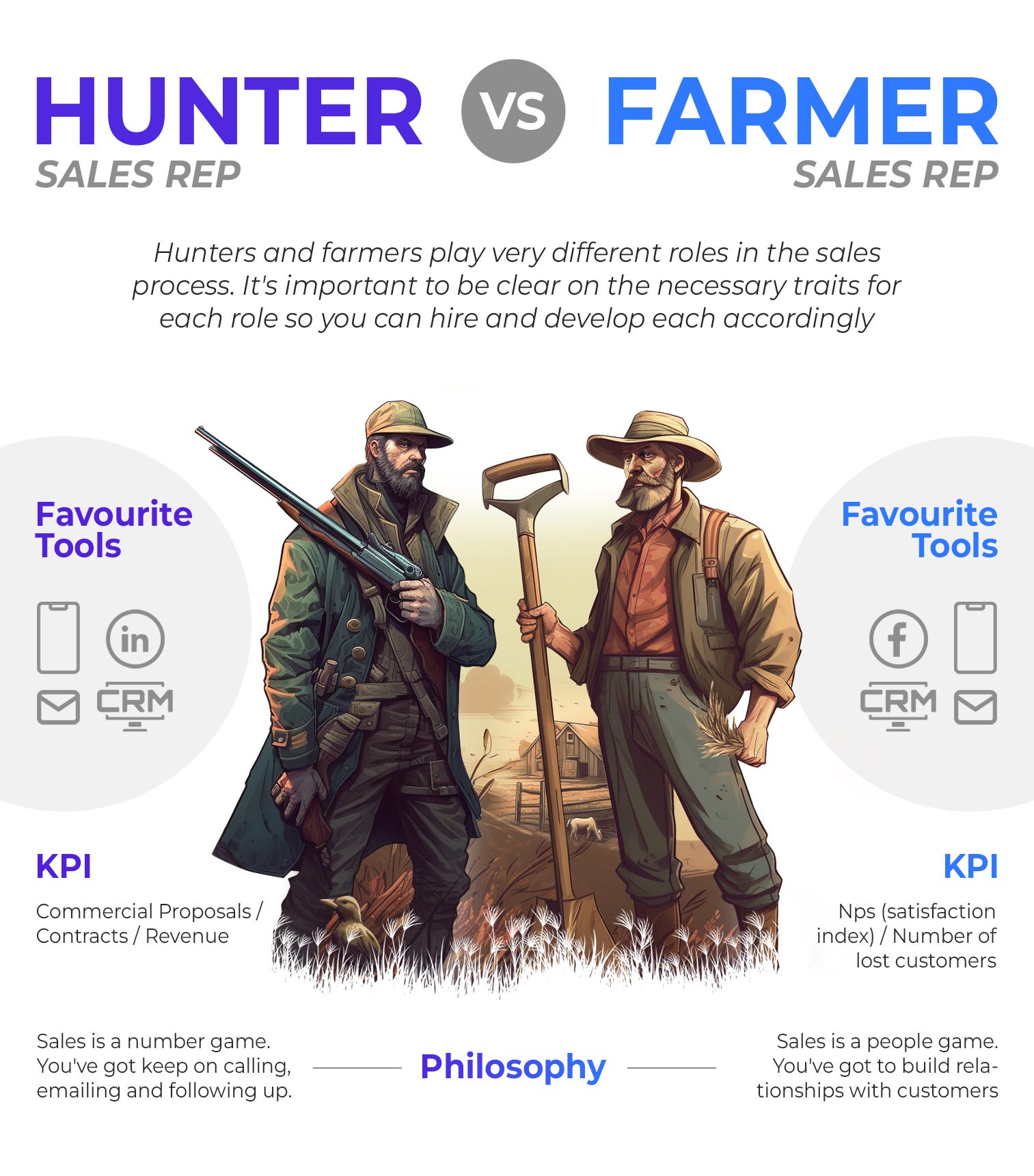
The two personalities inside every sales organization
If you’ve built a sales team, you’ve probably seen this already.
There are two types of commercial talent.
Hunters
They live for the chase. New deals. New logos.
New commission checks.
The moment a contract closes, their brain is already chasing the next opportunity.
Farmers
They thrive on relationships.
They nurture accounts, grow trust, and expand revenue over time.
They don’t love the adrenaline of closing deals.
But they excel at growing long-term revenue.
Both roles are essential. But here’s the mistake founders make especially when money is limited:
They split hunters from farmers with latter being done by CS team not account managers.
That’s exactly what I tried to do.
The model that looked perfect… on paper
When our company started scaling, we tried to build a clean system.
Sales would own the journey from contact to contract. Customer Success managers from Contract to Support
Once the deal closed, the account moved to Customer Success in our case
Customer Success would:
• manage the relationship
• drive adoption
• build case studies
• identify upsell opportunities
Meanwhile, sales would stay focused on hunting new business.
It looked perfect in the org chart.
But org charts don’t run companies.
People do.
The invisible friction that slowed growth
To reinforce the system, we designed incentives carefully.
Sales had unlimited commissions on new deals.
Customer Success had incentives tied to account expansion.
Everything should have worked.
Instead, friction started appearing everywhere.
We never even thought of hiring account managers as famers. Why? Some top reasons
1) they were expensive
2) We didn’t know when to actually hire them – the timing
3) Interview process was time consuming and we are busy growing
4) The fear how can you give your prized new accounts to a random new hire as it takes 90 days to judge talent (see PhD in Failures Volume 23)
Salespeople kept coming back to their accounts
Even with big commissions available elsewhere, they kept inserting themselves into client relationships. Why?
Because they built the trust.
And clients naturally called the person who sold them.
Sales and Customer Success didn’t trust each other (yet)
We underestimated how long internal trust takes to build.
For the first 6–12 months, every handoff created tension.
Sales worried accounts would be mishandled.
Customer Success felt sales overpromised.
The result was subtle—but costly.
Momentum slowed.
Relationship builders vs technical operators
Many salespeople are natural relationship builders.
Customer Success teams are often technically strong operators.
They deliver tremendous value.
But clients often open up more easily to the person who originally sold them.
And that difference matters more than most founders realize.
The mistake I made
I tried to enforce a clean separation between Sales hunters and Customer Success team too early. But early-stage companies are messy.
And forcing structure before culture is ready creates unnecessary friction.
The Bootstrapped Founder Playbook
If you’re building a company without unlimited VC funding, here’s the practical way to structure this.
Stage 1 — 0 to 10 clients
Sales owns everything
Your sales team (or you as founder) should:
• close deals
• manage relationships
• handle expansion
Why?
Because the most important thing at this stage is learning how customers actually use your product. Don’t over-engineer the org chart.
Stage 2 — 10 to 30 clients
Introduce Customer Success and Account Managers carefully. Don’t save money by hiring either or , it should be “And”
Let hunters and farmers sales team own the key relationships, while CS focuses on:
• onboarding
• product adoption
• solving operational issues
At this stage you’re still learning the customer value network.
Stage 3 — 30+ clients
Now you can split roles
Once your processes stabilize, separate responsibilities more clearly and define what is a good limit for account managers and customer success managers per X number of clients.
Sales remains hunters and continue to own their HOT clients (as defined in PhD in Failure, Volume 23), as Most salespeople have 5–10% of accounts they deeply care about. Let them stay involved. Trying to force them away from those accounts usually reduces expansion revenue
Customer Success focuses on customer health and adoption.
Protect your largest accounts with real farmers
If a client generates $500K+ annually, treat it differently.
Hire a dedicated account manager. Pay them well.
Spending $150K to protect a half-million-dollar relationship is one of the highest ROI hires you can make.
A controversial lesson: Customer Success should not be your sales team
This may sound counterintuitive.
But expecting Customer Success to drive major upsells often turns into fool’s gold.
Their real superpower is:
• adoption
• retention
• customer value
When they do that well, expansion opportunities naturally appear.
But closing those opportunities still often requires sales DNA.
Warning signs your model is breaking
If you see these signals, your structure needs adjustment.
• Salespeople (Hunters) spend more time managing accounts beyond their HOT clients than selling after you cross 20 plus clients
• You lose a customer without any warning
• Sales blames CS for losing deals
• CS blames Sales for overpromising
• Upsells slow despite strong client relationships
Clients refuse to meet your team for quarterly reviews.
Clients see you as a transaction vs. a strategic partner
The biggest warning sign of all?
Internal teams complaining about each other instead of talking about the customer.
The deeper founder lesson
Founders love designing elegant systems. But companies don’t grow because of org charts. They grow because of:
People -not AI in my opinion, especially in CS, Sales role when negotiating/closing sales and expanding within an account
Incentives-aligned with right roles generate impactful outcomes, but good incentives to wrong roles create zero outcomes.
Solving the hunter vs farmer problem was only the beginning. In the next few volumes of PhD in Failures, I will unpack
The real complexity started when we tried to build a Customer Success ecosystem around it. That’s where things got interesting.
Hiring the wrong profiles.
Misaligned incentives.
The Myth of Unicorn CS profile
And a set of structural problems that even- today’s AI tools — will struggle to solve.
About the Author
I’m Doctor Fail — a founder who turned failure into a multi-million dollar lesson. I share the raw stories no one talks about so you can skip the pain and grow faster. Today, I mentor startups and write PhD in Failure to help you navigate the grind from 0 to 1.
Dr. Fail
Still learning. Still falling forward.